
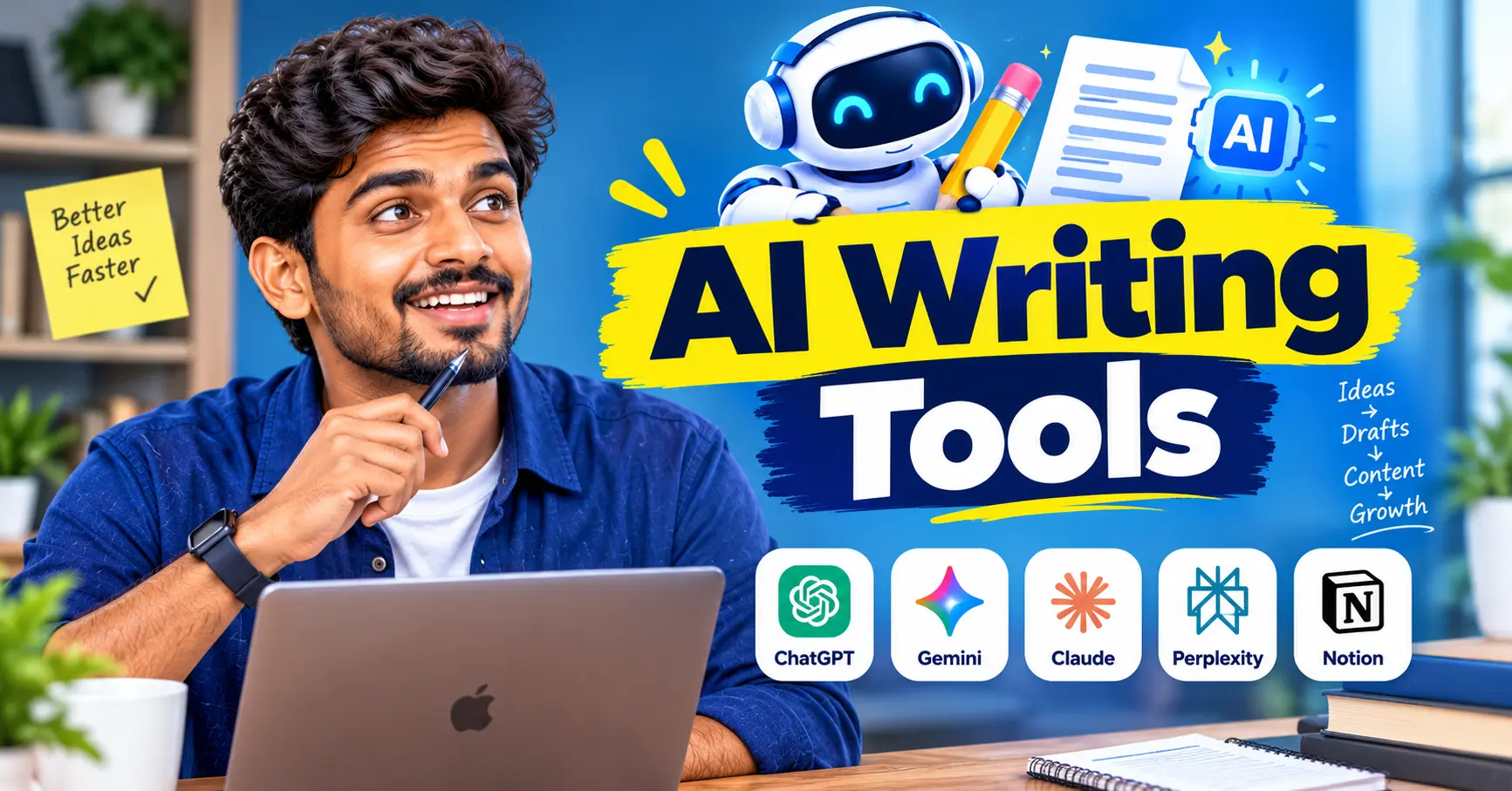
AI writing tools have changed the way businesses plan, draft and publish content. A product page or email campaign that once took a full day can now start with a solid draft in minutes, giving small teams more output without a larger payroll.
However, not every tool suits every job. This guide explains what these tools are, how they work, the main types available and how to choose the right one for your organisation.
What Are AI Writing Tools?
AI writing tools are software applications that use artificial intelligence to create, edit and improve written content. You give the tool an instruction, known as a prompt, and it produces text based on that request.
Most modern tools run on large language models trained on vast amounts of text. This helps them understand grammar, tone and context, so they can write in different styles, summarise documents and rewrite awkward sentences.
How Do AI Writing Tools Work?
At a basic level, the tool predicts the most likely next word in a sentence, then the next, until it completes a response. Because the model has learnt patterns from a huge range of text, the result usually reads naturally.
Output quality depends on the model, your instructions and the context you supply. A vague request produces generic content, while a detailed request with a clear audience, goal and tone produces far more useful work.
Types of AI Writing Tools
Tools now fall into several categories, and knowing them helps you avoid paying for features you will never use.
AI Copywriting Software
AI copywriting software focuses on short, persuasive content that drives action, such as advertisement headlines, landing pages, product descriptions and email subject lines. Many platforms include templates based on proven marketing frameworks.
AI Content Generator
An AI content generator is designed for longer pieces, such as blog articles, guides and newsletters. Good options build outlines and expand each section into full paragraphs. Some also recommend keywords and help you optimise content for search engines.
All-in-One AI Tool
An all-in-one AI tool combines writing with image creation, research, document analysis and data summaries. One subscription can replace several separate tools, saving money and keeping work in one place.
AI Chatbot Builder
An AI chatbot builder lets you create a conversational assistant for your website, app or messaging channels. You train the chatbot on your own content, such as FAQs, policies and product information, so it can answer customer questions at any hour and pass complex queries to your team.
AI Agents
AI agents go a step further than standard writing assistants. Rather than responding to a single prompt, they plan and complete multi-step tasks. An agent could research a topic, draft an article, check it against a brief and prepare it for publishing. Human review remains essential, but agents remove much of the repetitive work.
How to Write Better ChatGPT Prompts
Even the best tool depends on clear instructions. Well-written ChatGPT prompts follow a few simple principles that apply to most AI platforms.
Define the role. Tell the AI who it should act as, such as an experienced copywriter.
Explain the task. State exactly what you need, including the format and length.
Describe the audience. First-time founders need different language from accountants.
Set the tone and limits. Ask for a friendly, formal or persuasive style, and share key facts, target keywords and anything to avoid.
For example, instead of “write a blog about marketing”, try: “Act as a marketing consultant. Write a 600 word blog post for small business owners explaining three low-cost marketing ideas, in a friendly tone with short paragraphs.” The second version produces a far stronger draft.
Benefits of AI Writing Tools for Businesses
When used well, AI writing tools offer several clear advantages.
Speed: drafts that once took hours can be ready in minutes.
Lower costs: small teams can produce more content without a large budget.
Consistency: saved brand guidelines keep tone and style uniform across every channel.
Scale: businesses can create content for several products, markets or languages at once.
Fresh ideas: the tools are excellent for brainstorming topics, headlines and outlines.
Risks and Common Mistakes to Avoid
AI is a powerful assistant, but it is not a replacement for human judgement. These are the most common mistakes.
Publishing without editing. AI can produce errors, outdated facts or invented details, so always check facts, figures and claims.
Ignoring brand voice. Unedited AI content often sounds generic. Add your own examples, opinions and experience.
Keyword stuffing. Forcing keywords into every sentence harms readability and can damage search performance.
Sharing sensitive data. Avoid entering confidential client or financial information without first checking the tool’s privacy policy.
Use AI to support your expertise, not to replace it.
How to Choose the Right AI Writing Tool
Before you subscribe, weigh up these points.
Purpose: decide whether you mainly need short copy, long articles, customer support or task automation.
Output quality: test the same prompt in two or three tools and compare the results.
Language support: check that the tool writes well in British English or any language your audience uses.
Integrations: look for connections with your website platform, CRM or email software.
Pricing: compare free plans, monthly costs and usage limits against the value you expect.
Most providers offer a free trial, so test each option with real tasks first.
Frequently Asked Questions
Are AI writing tools free?
Many tools offer a free plan with limited features or usage. Paid plans usually unlock stronger models, higher limits and team features.
Can AI writing tools replace human writers?
No. They speed up drafting and research, but human writers are still needed for strategy, accuracy, originality and brand voice.
Is AI-generated content good for SEO?
It can be, provided it is accurate, helpful and edited by someone who knows the subject. Thin, unedited content rarely performs well.
Conclusion
AI writing tools are now a practical part of modern business. The right choice depends on your goals, whether that is AI copywriting software for sales pages, an AI content generator for blogs, an all-in-one AI tool for wider tasks or AI agents for automation.
Start small, write clear prompts and always edit before you publish. Used this way, AI helps your business create better content, faster.
